Artificial intelligence for development cooperation—FAIR Forward
From language assistants in Kiswahili to satellite data to protect the Indonesian rainforests: technologies based on artificial intelligence (AI) can significantly contribute to achieving the Sustainable Development Goals—for example in agriculture, climate protection and food security. But the prerequisites have to be right! This is where FAIR Forward comes in to strengthen global access to AI training data and technologies, build local AI expertise and support partners in shaping the political frameworks for value-based AI.
Our Impact
Billion people can benefit from FAIR Forward’s open-source AI foundations in their native languages in Asia and Africa.
Million people have benefited from improved governance frameworks for ethical and responsible AI geared towards the public good.
FAIR Forward’s impact spans language AI, climate resilience, agriculture, and governance. With its partners FAIR Forward has laid the groundwork for over one billion people in Africa and Asia to participate in society digitally in their native languages. It has helped to protect the climate and ensure food security by providing 91 local open–source datasets and over 50 open-source local AI models ready for replication. FAIR Forward has also expanded AI capacity building for over 256,400 professionals in Africa and Asia and has developed ethical AI strategies and frameworks in Rwanda, Ghana, Kenya, South Africa, India, and Indonesia, as well as with Smart Africa in 34 countries. This has been complemented by extensive peer learning between state officials.
The impact report showcases the approach, impact and replicable solutions of FAIR Forward in democratising AI through open-source.
- The Why – FAIR Forward approach and values
- The What – Global and regional impact
- The How – Key approaches, tools, lessons learnt and replicable products

Artificial intelligence is changing lives: In northern Uganda, AI-based location recommendations are helping to supply villages like Nancy Amito’s with solar power. Her restaurant is literally a shining example—and that’s just the beginning!
Get access to reusable AI datasets and AI models
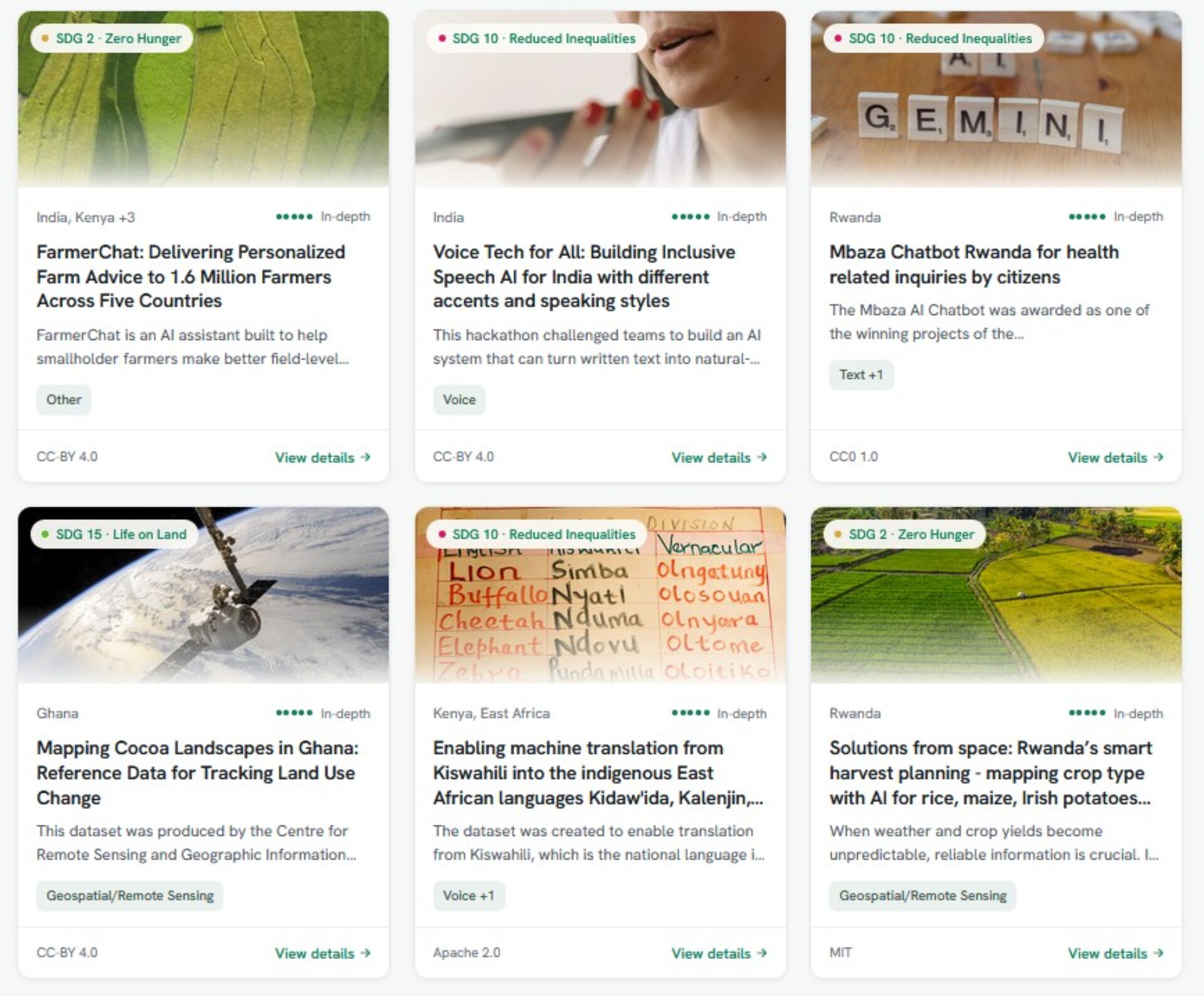
FAIR Forward, with and through its partners, has created globally reusable ‘AI building blocks’ for the most important AI application areas for climate and agriculture, and language AI. These datasets, open-source AI models and corresponding documentation work locally and can be shared, adapted and further developed across regions as a digital public good.
Fair Forward – Catalog of Open Source AI Datasets, Models & AI Systems
Our approach and goals
Implemented by GIZ, the project “FAIR Forward—Artificial Intelligence for All” is part of the “Digital Transformation for Sustainable Development” programme of the German Federal Ministry for Economic Cooperation and Development (BMZ) and is also supported through the AI Strategy of the German Federal Government.
The initiative contributes to democratizing artificial intelligence (AI) worldwide. It uses AI to fight poverty, reduce inequalities and achieve a Just Transition in the areas of climate change and agriculture.
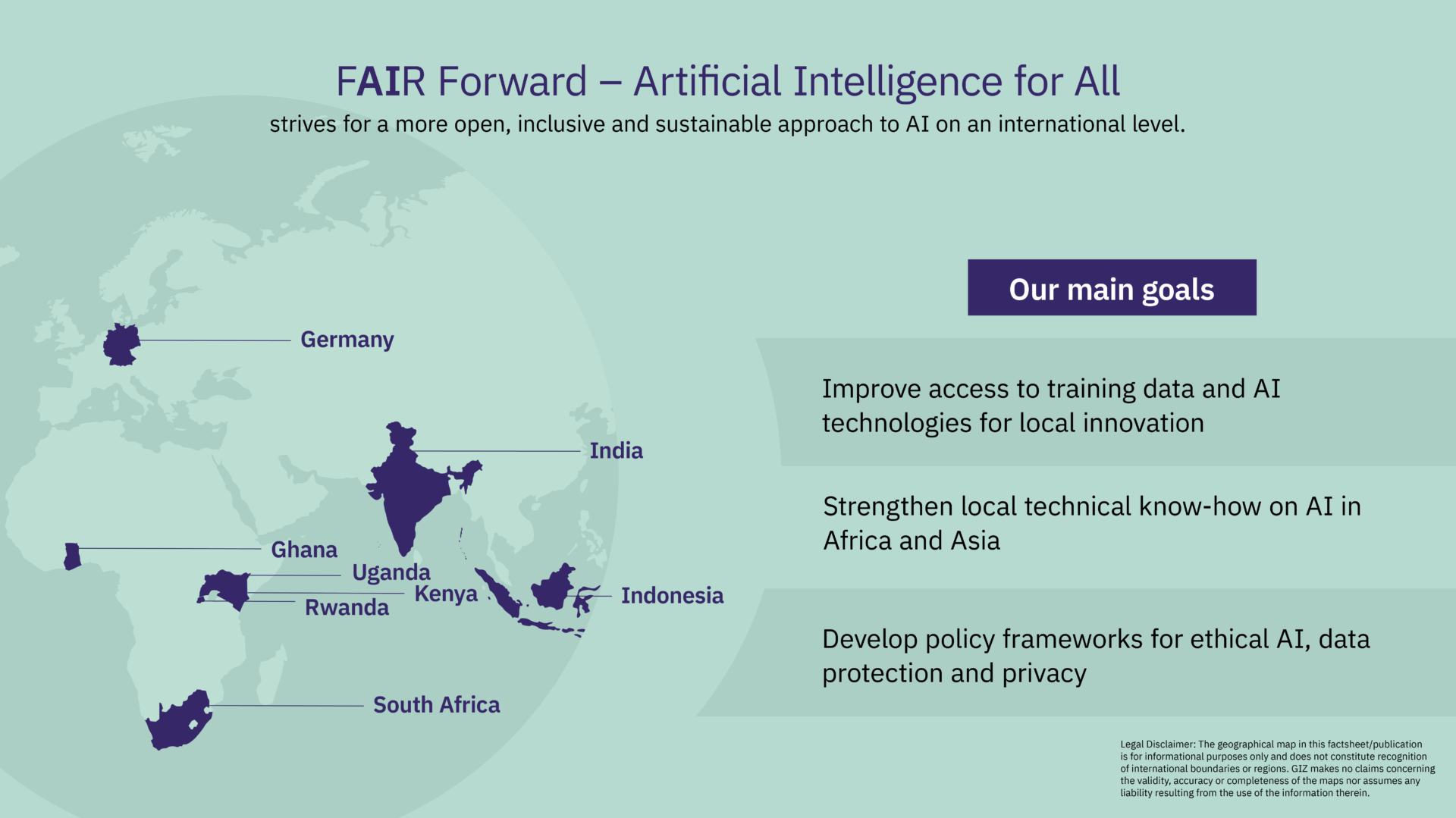
Globally and together with seven partner countries in Africa and Asia, FAIR Forward implements Germany’s AI strategy internationally (Ghana, Kenya, Rwanda, Uganda, South Africa, India, Indonesia).
Together, we have worked on three main goals:
-
Remove entry barriers to AI: FAIR Forward facilitates the provision of open, non-discriminatory and inclusive training data, models and open-source AI applications. This includes open language data to enable voice-based access to services and information, and earth observation data to empower marginalised groups with access to climate-smart agricultural advice. Through these efforts, we aim to ensure that AI benefits everyone. As part of this effort, FAIR Forward has worked in several key areas, including:
- Language AI by and for all – making AI speak your language
FAIR Forward has worked extensively to address the shortage of AI training data in emerging and developing countries. Some examples.
- Building Inclusive language AI for over a Billion Million people: the Masakhane African Languages Hub Masakhane (which means “let’s build together”) is a grassroots community of over 2,000 African NLP researchers at the forefront of building AI by, with and for Africans. In April 2025, the Masakhane Hub for African Languages was launched to address the critical underrepresentation of African languages in AI. FAIR Forward has supported the creation and structuring of the Hub through technical consultation rounds, multi-stakeholder design workshops in Ghana and Kenya, and with inclusive data governance models. Supporting the Hub creation has led to the collective action by the AI for Development Funders Collaborative to foster the African language AI ecosystem. By developing open source datasets, AI models, and scalable use cases tailored to local contexts, the Hub is working towards democratizing language AI technology. Anchored in community-driven approaches, the Hub aspires to empower over one billion Africans by 2029 by enhancing equitable access to AI technologies.
- Open-source, data governance and licencing
With Mozilla Foundation, the Open for Good Alliance and Maseno University, FAIR Forward has been working towards building open voice datasets (datasets with Mozilla, datasets with Maseno) and community-led data governance models – all to work towards to principle: Data Sharing: yes! Data Colonialism: no!
- Creating markets: Open-source AI for Inclusive Voice Technologies in India
In India, together with the Indian Institute of Science (IISc), FAIR Forward has collected language data in Indian languages and made them freely and openly available to Indian partners. Overall, our efforts to open language technology in under resourced languages spans African, Indonesian and Indian languages, such as foundational AI on on voice or on textbased AI such as chatbots. This has created the foundations for AI reaching over 1 Billion people worldwide in their mother tongues.
- Agri AI – better harvest, food security, farmer advice and less crop diseases
Using hyperlocal geo-referenced data and high-resolution satellite imagery, FAIR Forward supports climate-smart agricultural use cases. In Kenya, with the Local Development Research Institute (LDRI) an AI Early Warning System was developed that monitors farming activities and supports AI-powered practices of smallholder farmers in Kiambu and Embu counties of Kenya.
In the Indian state of Telangana, we have partnered with the Department of Agriculture & ITE&C Department to support the development of an AI-based crop type map for the state.
- Reusable AI building blocks for global challenges
91 local open-source datasets and 50+ open-source local AI models are available for replication in the Fair Forward – Catalog of Open Source AI Datasets, Models & AI Systems
- Language AI by and for all – making AI speak your language
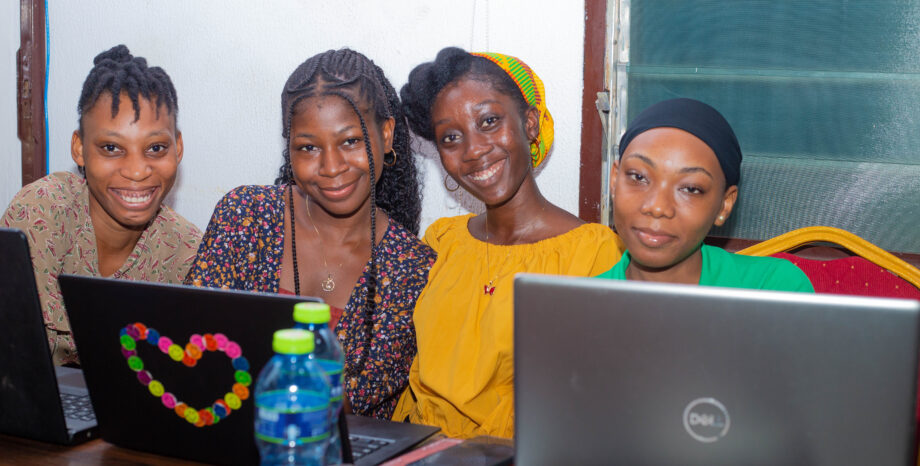
Have you recently used artificial intelligence (AI) for online research, text translation, or image generation? If so, you are not the only one. However, a significant gender gap in access to AI exists worldwide. How can this be changed?
Read more in the article “New skill unlocked: AI Bootcamp turns barriers into careers”.
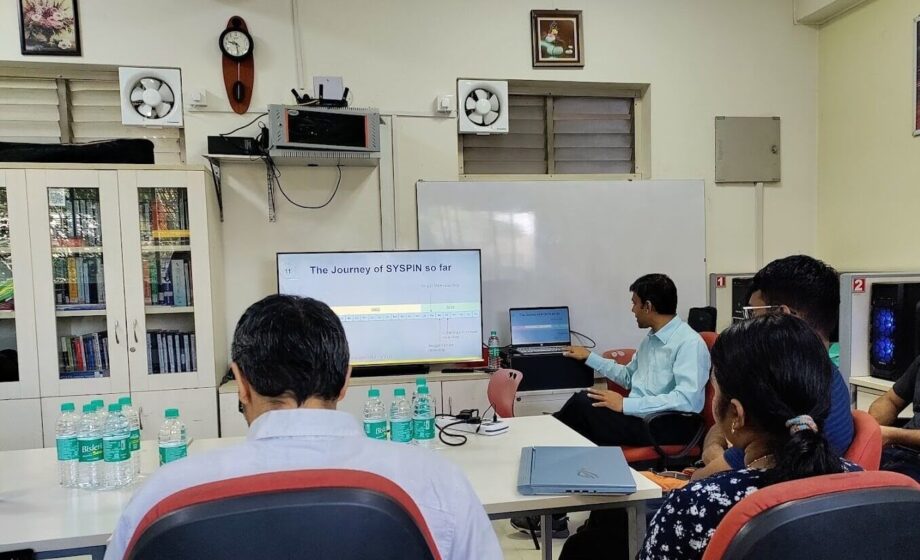
In a country as linguistically diverse as India, voice technology has the potential to transform how people connect with information, services, and each other.
Learn more in the article “Loud and clear: Open source for India’s linguistic diversity”.
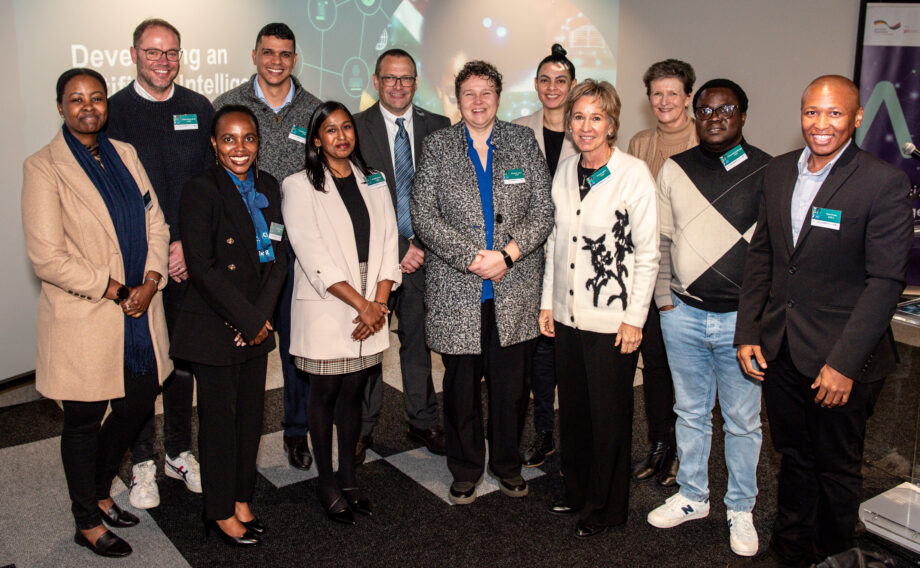
The AI Maturity Assessment Framework (AI MAF), launched in March 2025 as part of the BMZ Initiative FAIR Forward – Artificial Intelligence for All, aims to assess South Africa’s readiness for AI integration.
Read more in the article “South Africa’s readiness for AI integration: Launch of the first Annual AI Maturity Assessment”.
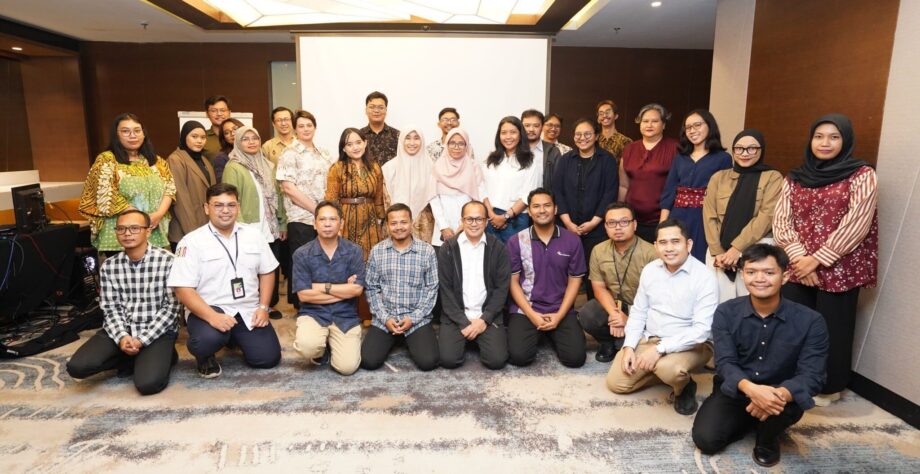
FaktaIklim is Indonesia’s first AI-powered chatbot that addresses climate misinformation in local languages.
Learn more in the article “Data vs. disinformation: Chatbot FaktaIklim tackles climate myths”.
Replicate this
The FAIR Forward Replication Kit brings together the initiative’s key experiences and proven methods in the areas of open-source and locally anchored AI, capacity building and responsible AI governance from 2019 to 2026.Designed specifically for practitioners, learners, organisations, institutions and governments, it contains lessons learned, methodologies, playbooks, studies, open-source datasets, AI models and implementation guidance, which can be adapted and replicated in different contexts.
The replication kit contains the following:
- Replication part 1: Five FAIR Forward Products for Institutions, Governments and Development Partners & Replication Kit for AI Practitioners
- Replication part 2: Lessons Learned
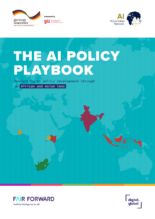
- Replication part 3: Playbooks, Handbooks & Studies
- Replication part 4: A Catalog of Open Source Datasets, AI models and AI systems
- Replication part 5: Key actions of FAIR Forward with links to key information