For millions of people across the Global South, proof of financial reliability is scattered across mobile wallets, savings groups and informal ledgers. If this data were connected and accessible, financial service providers could use it to design products for the unbanked and underbanked, unlocking value that isolated data fragments never could.
That is the idea behind the work of the BMZ-funded Data Economy Initiative at GIZ, part of the “Data Governance in Africa” Team Europe Action, which is co-funded by the European Commission and five EU Member States. The Action supports African countries and regional institutions in building human-centric, development-oriented data economies. Together with partners like Cenfri (The Centre for Economic Governance and Accountability), the initiative has supported open finance and responsible financial-sector data sharing across several African markets.
Three countries, three starting points
In South Africa, the initiative “ Data Governance in Africa” supported an open finance readiness assessment with the Intergovernmental Fintech Working Group (IFWG), examining regulatory, infrastructure, supply-side and demand-side conditions and possible pathways to implementation.
In Kenya, support to the Central Bank of Kenya, in partnership with CGAP (the Consultative Group to Assist the Poor), contributed to a comprehensive readiness assessment and an implementation roadmap.
In Rwanda, where work was already more advanced, the focus was on implementation, including the development of a financial-sector data repository with the National Institute of Statistics Rwanda to help fintechs and other actors better understand the markets they serve.
A regional conversation in Mombasa
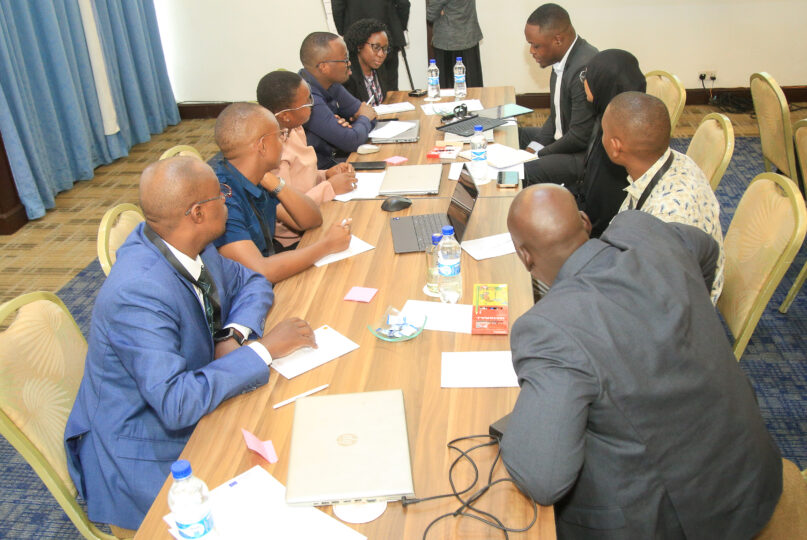
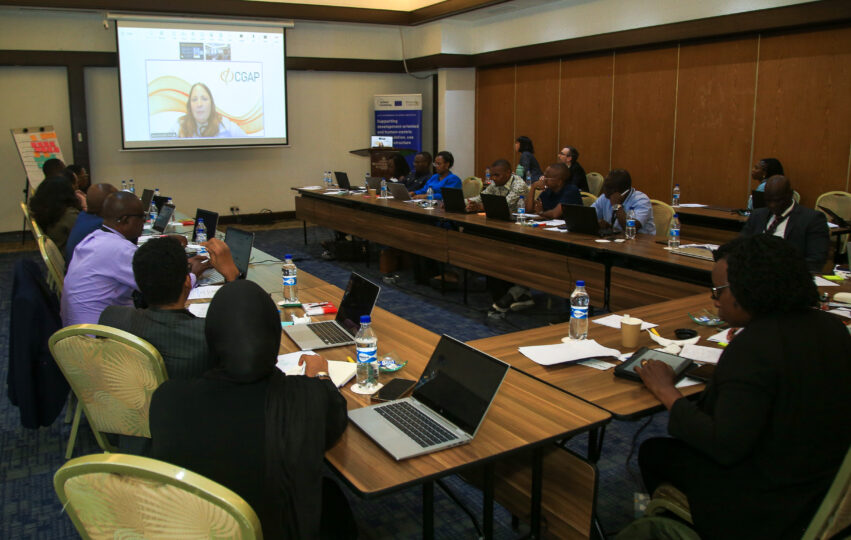
In early 2026, the Data Economy initiative convened central bank representatives from all eight East African Community (EAC) Partner States in Mombasa. Instead of asking how to implement open finance, participants asked what problem each country is trying to solve and whether data sharing is the right tool. Cenfri’s readiness framework, built on four pillars (policy and regulation, infrastructure, supply-side and demand-side readiness), gave them a shared language. Central banks named common constraints, from limited interoperability and uneven smartphone access to regulatory gaps and dominant market players.
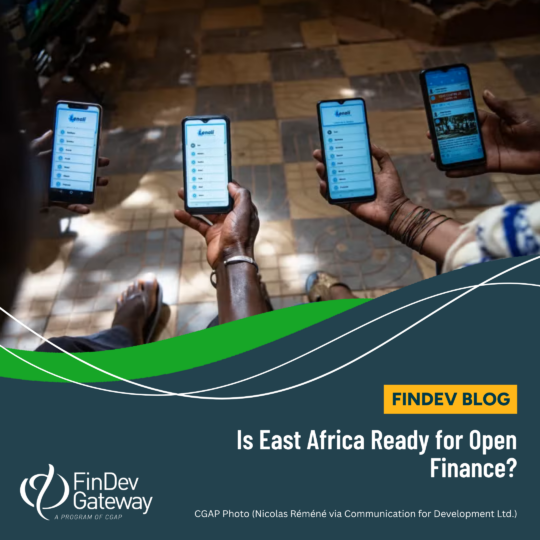
The key messages were captured in an article on FinDev Gateway by Modupeoluwa Oluokun, Open Finance Lead at GIZ, and Maria Fernandez Vidal, head of CGAP’s Data team. Their conclusion: coordinate without forcing uniformity. Countries can move at their own pace while aligning on a legal and regulatory baseline, minimum standards on consent and liability, common API and security standards, and regional technical coordination. They also caution that open finance could deepen inequalities if designed mainly for digitally confident smartphone users.
From design to oversight
As the work progressed, one lesson became clear: developing a framework is only part of the task. Regulators must also consider how an open finance ecosystem will be overseen, how emerging risks will be identified, how consumers will be protected and how success will be measured.
This is the focus of “Oversight and Supervision in Open Finance: Considerations for African Regulators,” developed as part of the collaboration. Rather than proposing a single supervision model, it offers practical considerations that regulators can adapt to their market structure, institutional arrangements, capacity and stage of implementation.
Together, these efforts point to a shared goal: open finance ecosystems that are not only technically functional, but also well governed, trusted and able to deliver meaningful value for consumers and the wider financial sector.