Turning experience into opportunity: Joana’s mission to grow Ghana’s digital talent
By equipping women with practical advice and encouragement, Joana is becoming a role model for those seeking a career in the digital economy.
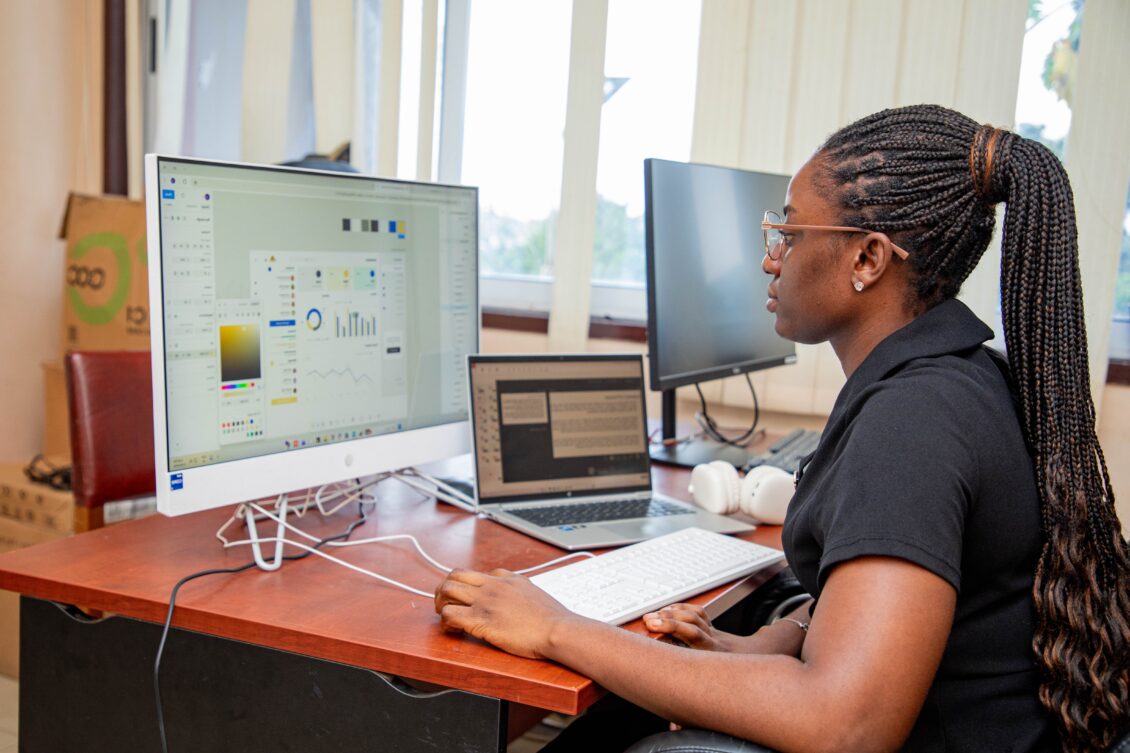

When Joana Amavih looks back on her first years studying computer science at university, one moment still stands out. During lectures, professors would ask “the boys to help the girls”—a remark that subtly reinforced the message that women did not fully belong in the digital world. Like many young women in Ghana, Joana faced barriers early on: limited access to training, few female role models, and societal expectations that discouraged women from pursuing careers in tech. Yet, the digital economy was booming, and she was determined to be part of it.
Today, Joana works as a technician at the Ghana Meteorological Agency and has built a second career as a freelance UI/UX designer. Having navigated her own path into digital work, she knows how challenging the first steps can be. Wanting to inspire other women to learn new digital skills and to enter the male-dominated tech sector, she joined the Gig Economy’s Mentorship and Peer Learning Programme as a mentor.
Implemented by Soronko Academy, the programme connected 12 experienced professionals with 60 mentees. Over the course of six weeks, Joana mentored a group of five women who were just starting their journey in the digital economy. Drawing on her own experiences, she guided them through topics such as identifying upskilling opportunities, creating a portfolio, and negotiating fair contracts and working conditions. Equally important, she created a space for open conversations about challenges many women encounter: from sceptical family members to online discrimination and balancing work and personal life.
For Joana, mentoring goes far beyond teaching technical skills. It’s about boosting confidence by sharing experiences and building a community of women who support each other as they enter Ghana’s growing digital economy.
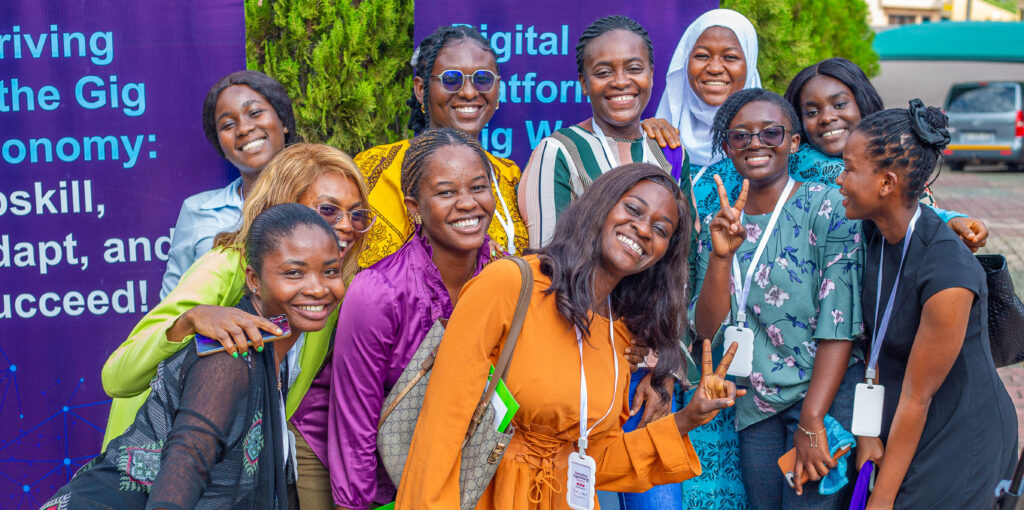
Mentorship creates opportunities that training alone cannot. It turns knowledge into confidence, showing women that they have a place in the digital economy—and that’s how we create a more inclusive tech sector in Ghana.
Joana Amavih, Mentor, Mentorship and Peer Learning for Women Workers Programme
The Mentorship and Peer Learning for Women Workers Toolkit provides organisations with a roadmap for designing and implementing effective digital skills and mentoring programmes at scale. The aim is to strengthen women’s participation in the gig economy by fostering confidence, professional networks, and long-term engagement through peer learning strategies.