‘No one can do it alone’ – Bärbel Kofler sets an example for sustainable AI in India
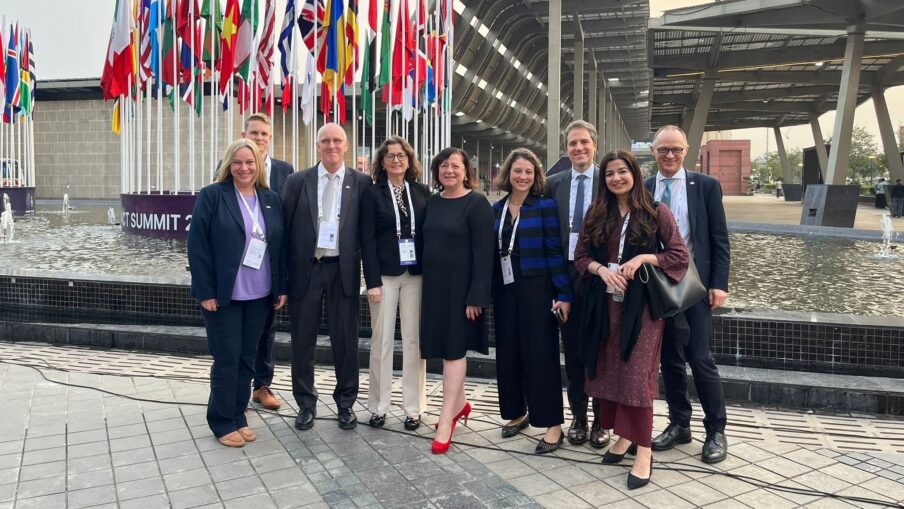
The India AI Impact Summit was the first international AI summit to be held in the Global South. From 16 to 20 February, over 250,000 participants from the worlds of politics, civil society, academia, and the private sector, hailing from more than 100 countries, convened in New Delhi to explore the ways in which AI can foster sustainable development while mitigating the exacerbation of existing inequalities. Representing the BMZ at the summit was Parliamentary State Secretary Dr Bärbel Kofler.
For the German Federal Ministry for Econoic Cooperation and Development (BMZ), AI is not just a future topic, but a current reality: after all, German development cooperation has focused on artificial intelligence since 2019, particularly through the FAIR Forward initiative. Dr Kofler’s attendance enabled her to provide a development policy perspective on AI. The BMZ’s goal is to utilise AI as a driver of sustainable development and a resource for all.

©SPD/Maximilian König
Sustainable AI needs strong partners. No one can do it alone.
Parliamentary State Secretary Dr Bärbel Kofler, BMZ, in New Delhi
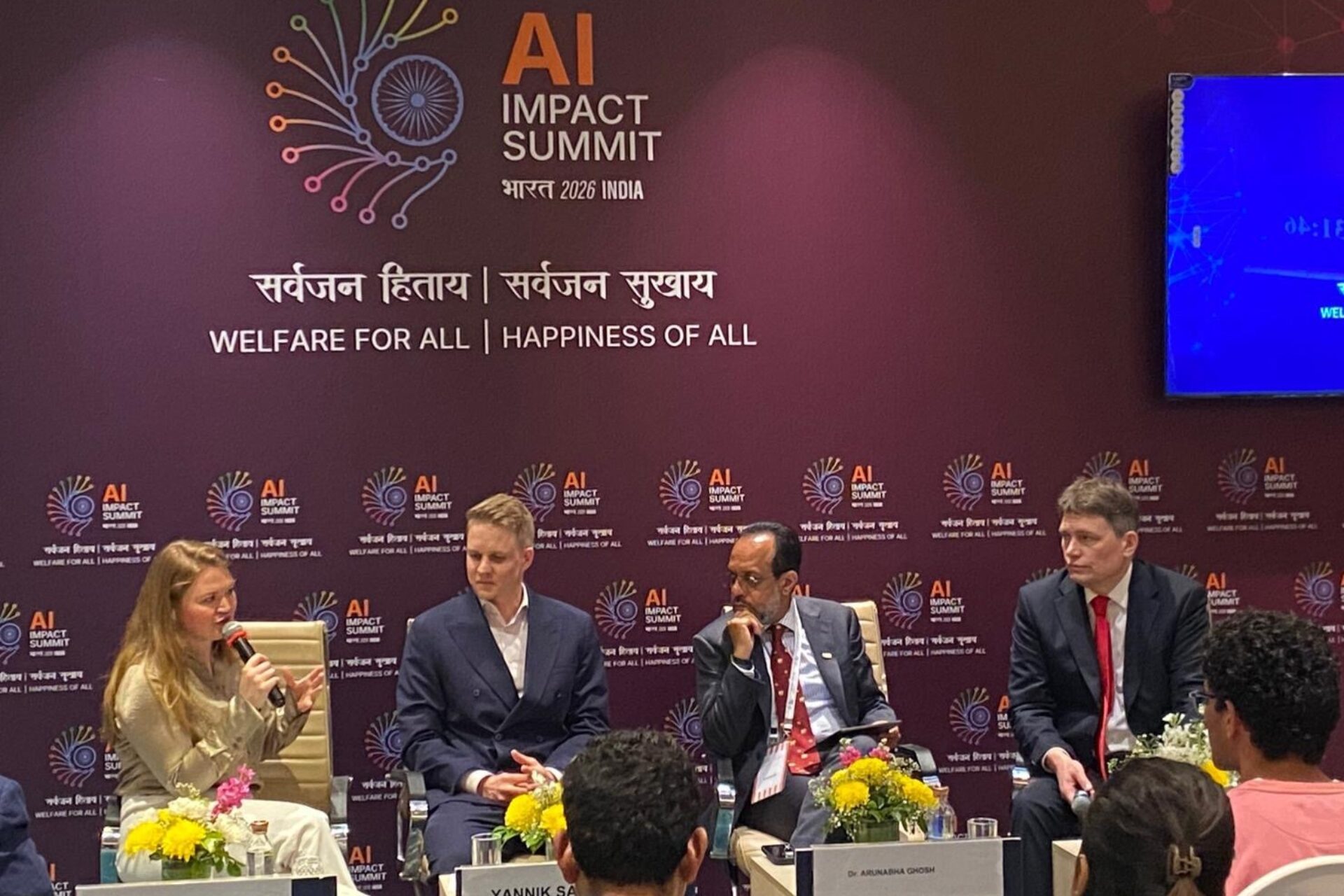
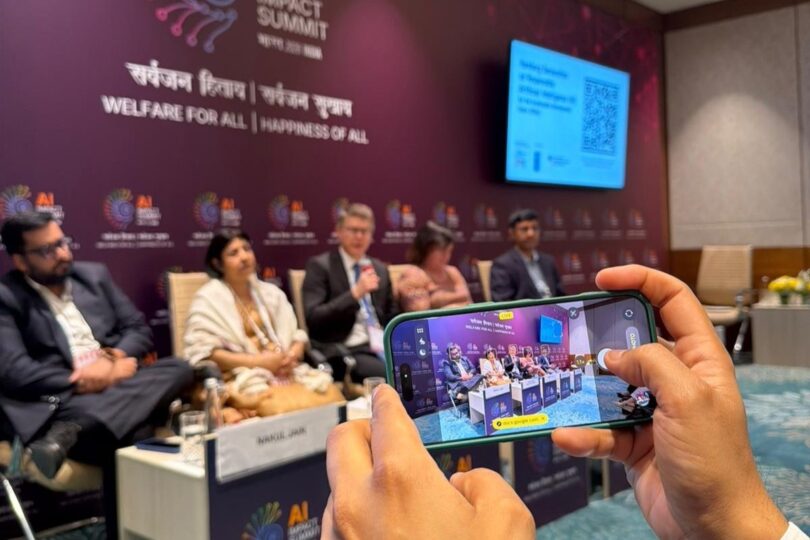
The first issue is the language barrier: if Siri, Google Assistant and other chatbots only understand a few languages, they exclude a large part of the world’s population. At the event ‘Speaking Everyone’s Language: The Key to Inclusive AI Opportunity’, Bärbel Kofler made it clear that AI can only be fair if it understands all languages. Since 2019, the BMZ project FAIR Forward has been supporting open data sets and technologies for previously underrepresented African and Asian languages, ensuring that millions of people can use AI.
AI as a driver of development policy
The summit clearly demonstrated that AI is a significant political and economic force. Currently, computing power, data and capital are concentrated in a few countries. If countries in the Global South do not gain equal access to technology and skills, this inequality will only become more entrenched.
At the same time, however, AI offers enormous opportunities, including better healthcare, more efficient administrative processes, climate-resilient agriculture, and new educational opportunities. In order to ensure that everyone benefits from this potential, open standards, transparent framework conditions and targeted investment in local capacities are required.
Responsible AI: concrete approaches
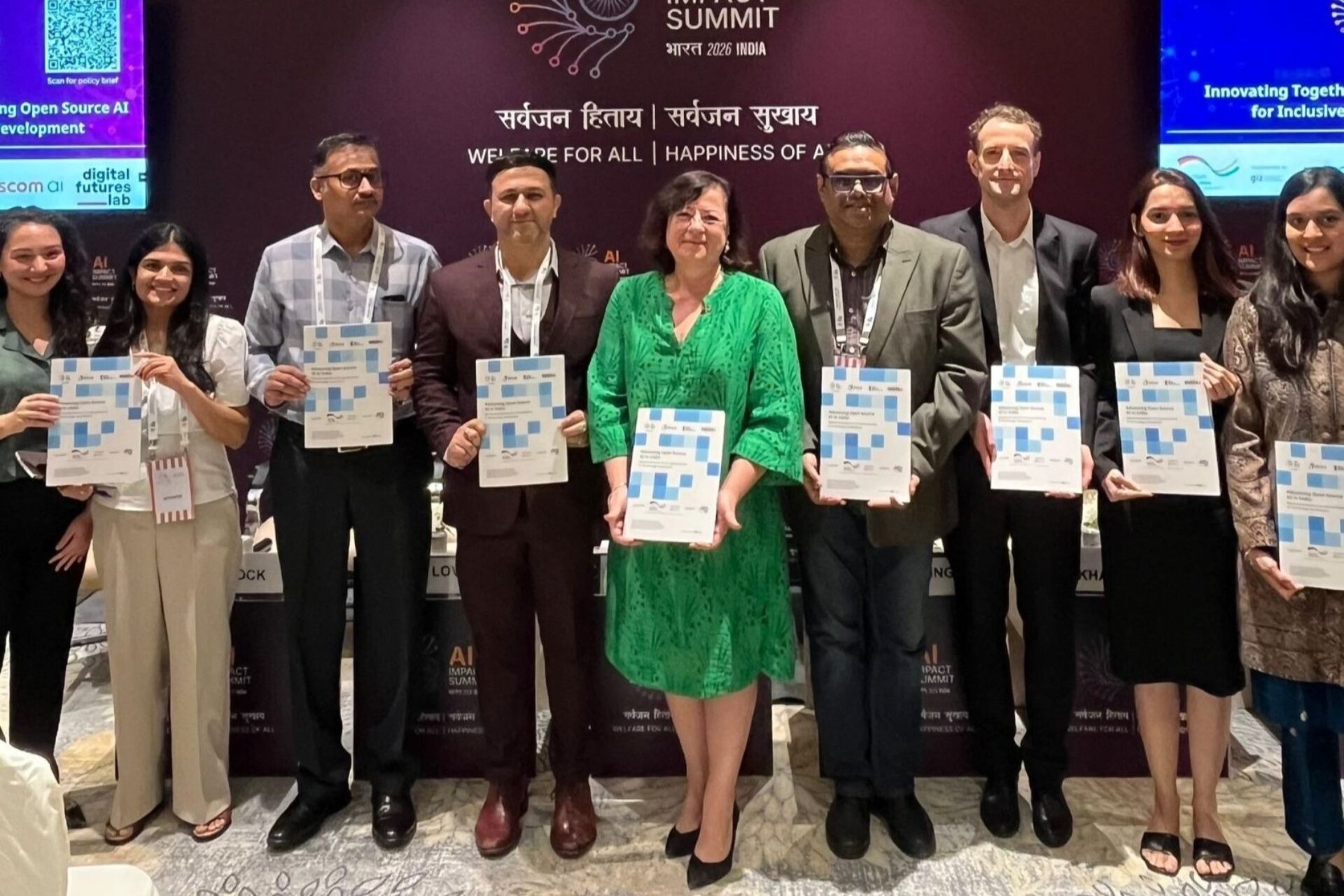
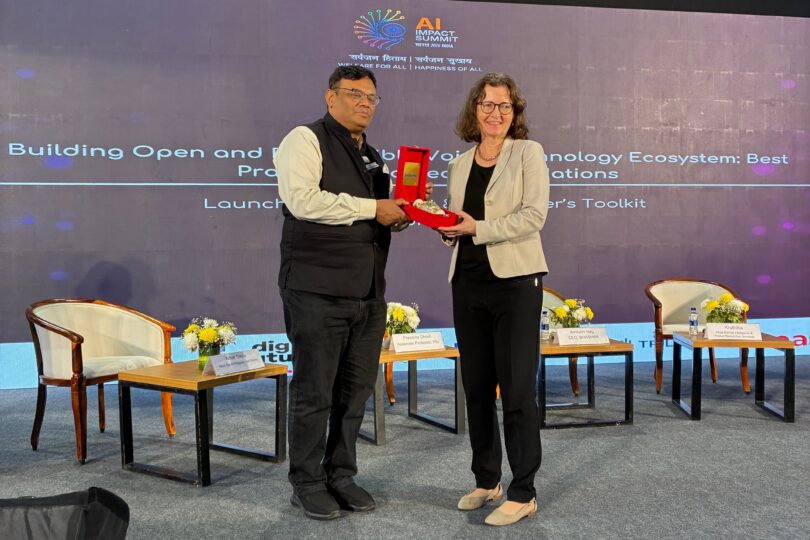
In a keynote speech at an event organised by the Nasscom business association, the Digital Futures Lab and the IndiaAI Mission, Dr Bärbel Kofler praised the jointly developed policy brief „Advancing Open-Source AI in India“, stating that it demonstrated how open AI solutions can promote innovation, transparency and participation on a large scale.
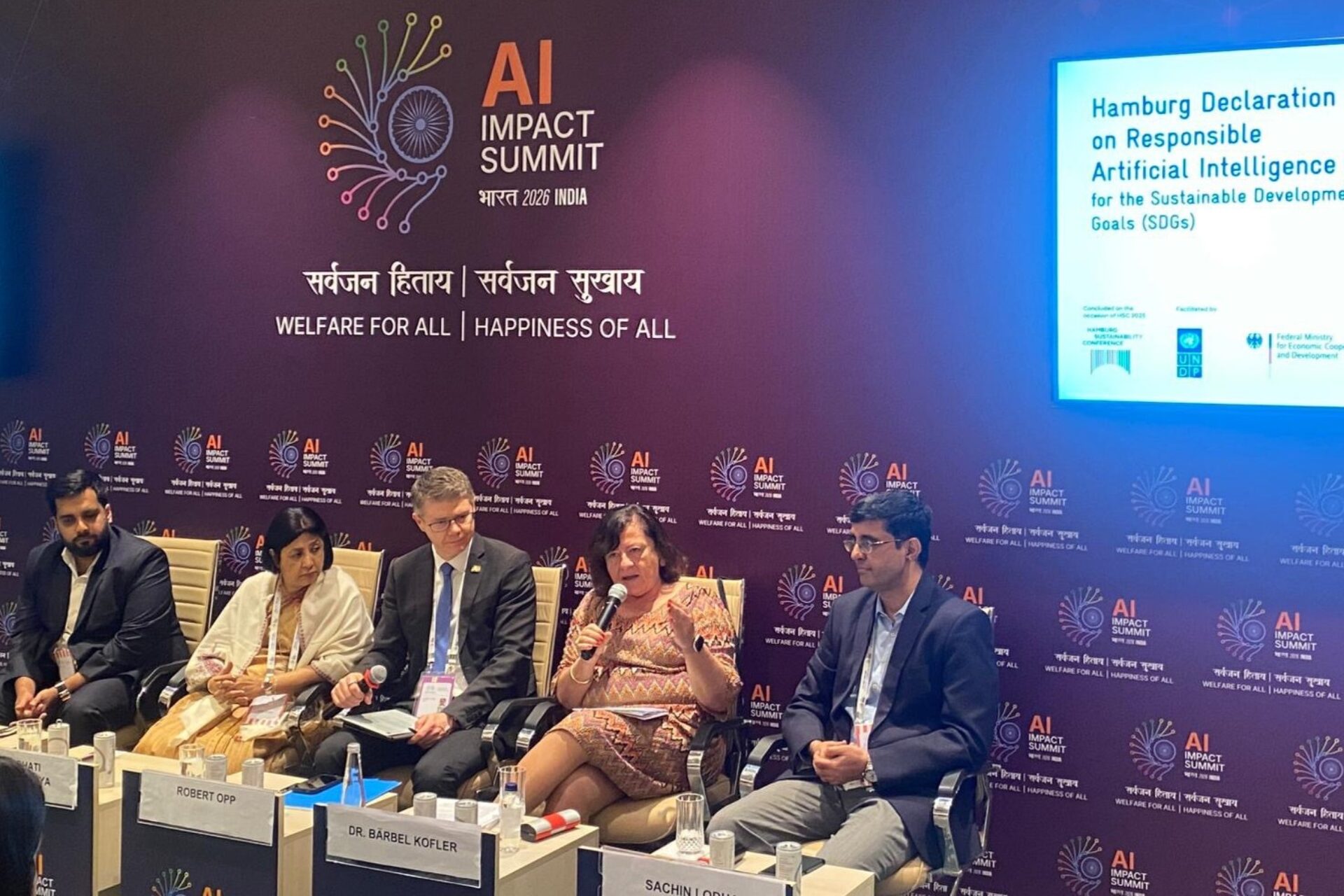
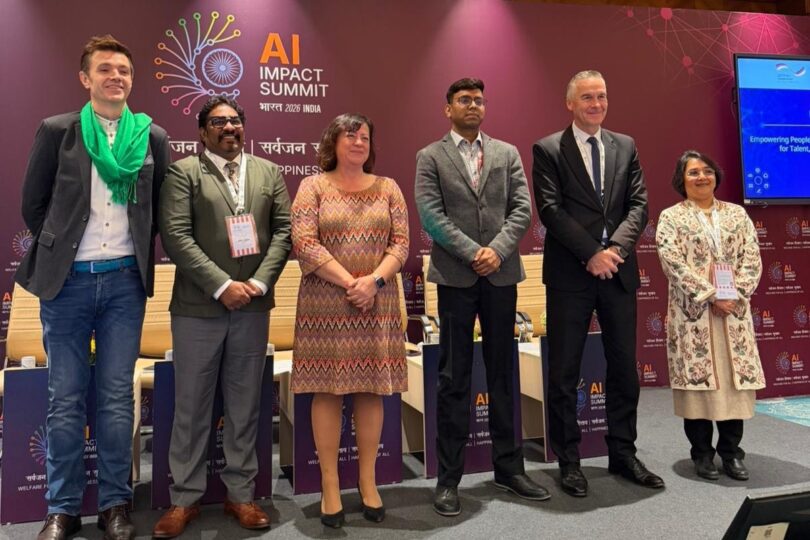
The Hamburg Declaration on Responsible AI, adopted in 2025 by the BMZ, UNDP and 50 partners, was discussed in the panel session ‘Multistakeholder Partnerships for Thriving AI Ecosystems’. During this discussion, Dr Bärbel Kofler emphasised the shared responsibility of governments and partners, stating that investment in infrastructure and skills, as well as a clear focus on the common good, are the basis for inclusive AI ecosystems.
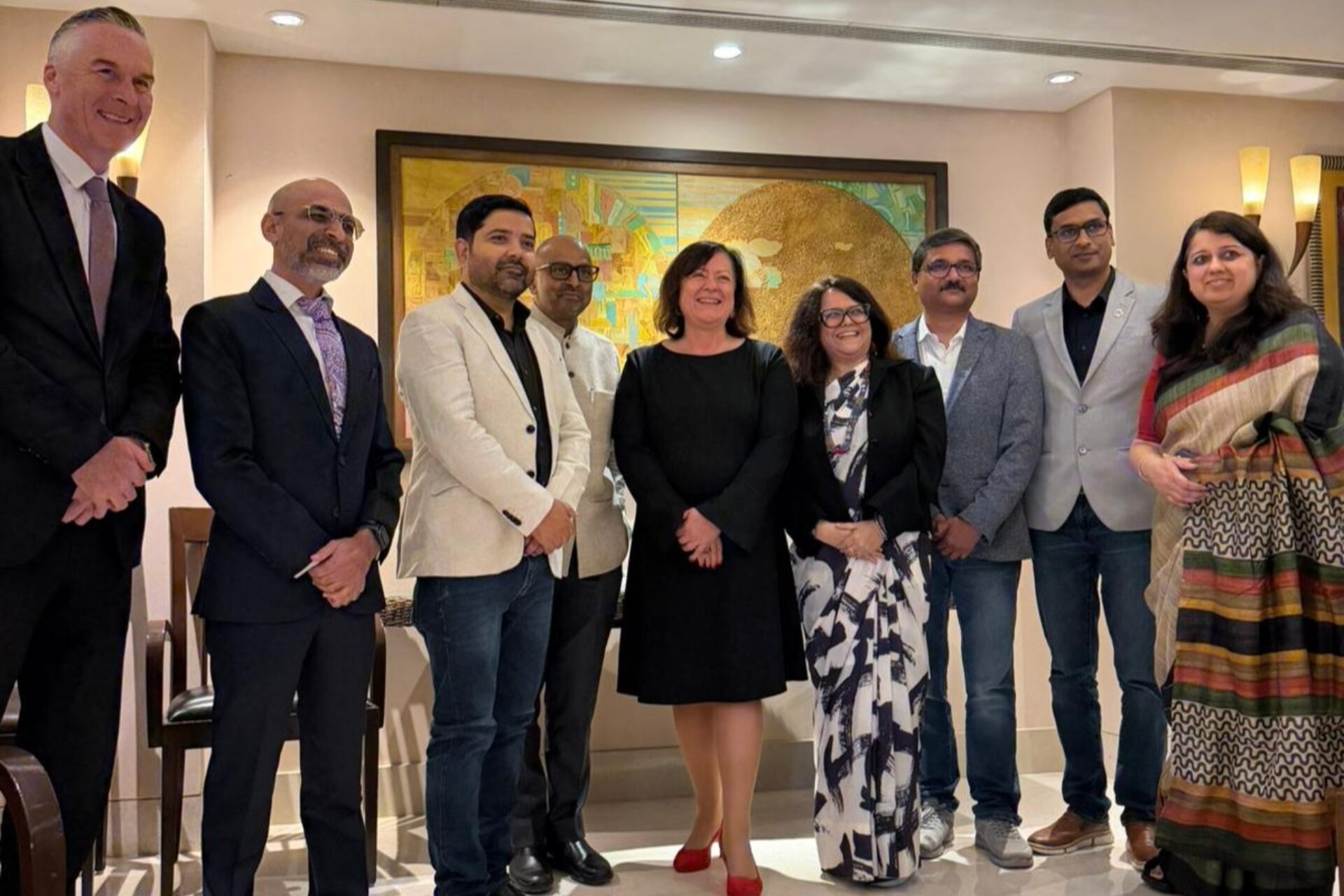
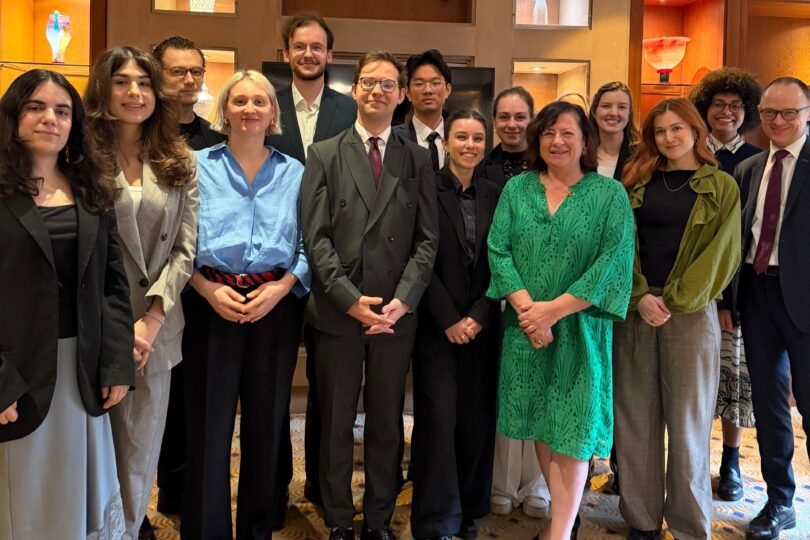
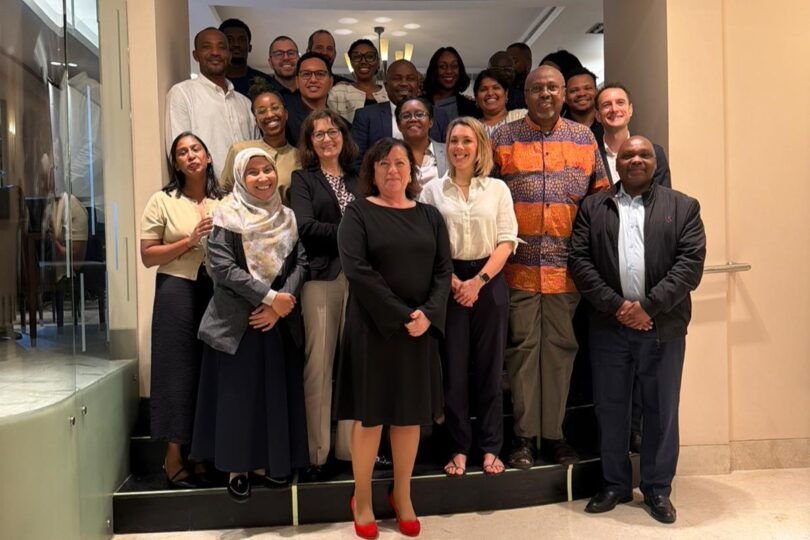
During a roundtable discussion with representatives of German and Indian companies, Dr Kofler discussed the shared challenges and opportunities facing the two business locations, as well as potential avenues for closer collaboration in artificial intelligence. During a subsequent meeting with civil society organisations, she discussed current challenges and emphasised the importance of these organisations as strategic partners of the BMZ.
The BMZ Data Lab also attended the AI Impact Summit. The lab presented NegotiateCOP, a practical AI solution that supports small delegations at international climate negotiations by comparing their positions with those of other countries and providing suggestions for possible compromises.
Partnerships are key
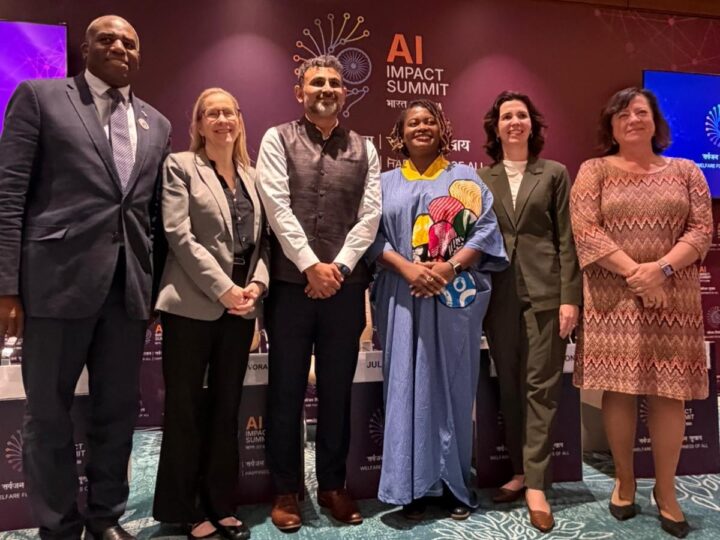
The AI Impact Summit was not just a technology summit; it was also a platform for the exchange and cooperation of ideas on responsible AI, opening up opportunities for the Global South. Whether AI reduces or exacerbates global inequalities is not simply a matter of programme code. It is a matter of political design. The BMZ is continuing to work on this, collaborating with strong partners worldwide. As Bärbel Kofler said, ‘No one can do it alone.’
 ©GIZ
©GIZ
 © copyright
 © copyright
 © copyright
 © copyright
 © copyright
 © copyright