
© Pixabay from Pexels
With common virtual assistants like Alexa and Siri, early versions of Artificial Intelligence (AI) have already entered many people’s everyday lives. Generative Pre-trained Transformer 4, or GPT-4 for short, on the other hand, is much better, but still largely uncharted territory. But that could soon change. The system speaks languages at native level, can answer complicated questions and even understands human emotions. Could it soon find its way into our everyday lives? But what exactly is GPT?
Dr. Iliya Nickelt, Chief Data Scientist at BMZ, addresses this question in the following video series. The webinar series provides data literacy training to introduce the topic of artificial intelligence and AI language models: While classical information technology is developed with code and software, AI can be taught and optimizes itself independently. This makes it less controllable than classical IT- a risk, which spurs discussion on ways to regulate it.
Among other things, the impressive results with which GPT-4 passes the pre-selection tests for the diplomatic service are shown – this is also the first more comprehensive test of GPT-4 in the German language.
Part 1:
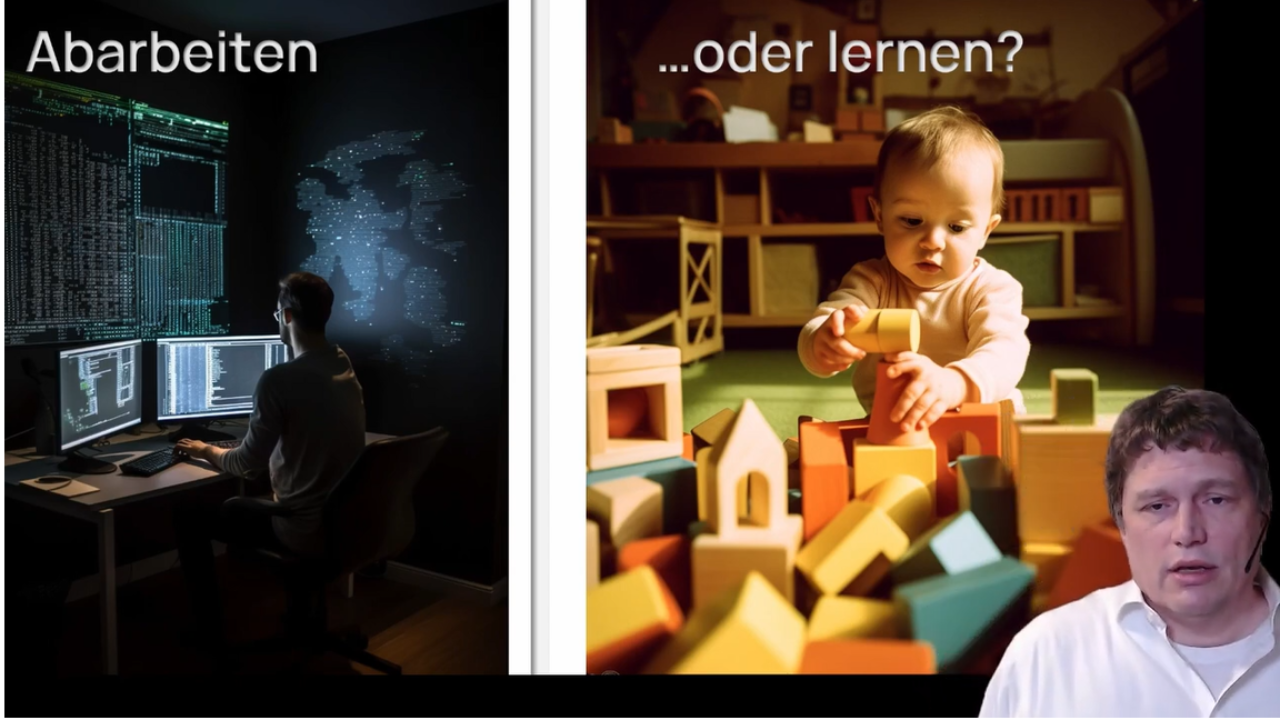
Where does AI come from and how does it differ from classical information technology?
You are currently viewing a placeholder content from YouTube. To access the actual content, click the button below. Please note that doing so will share data with third-party providers.
More InformationPart 2:
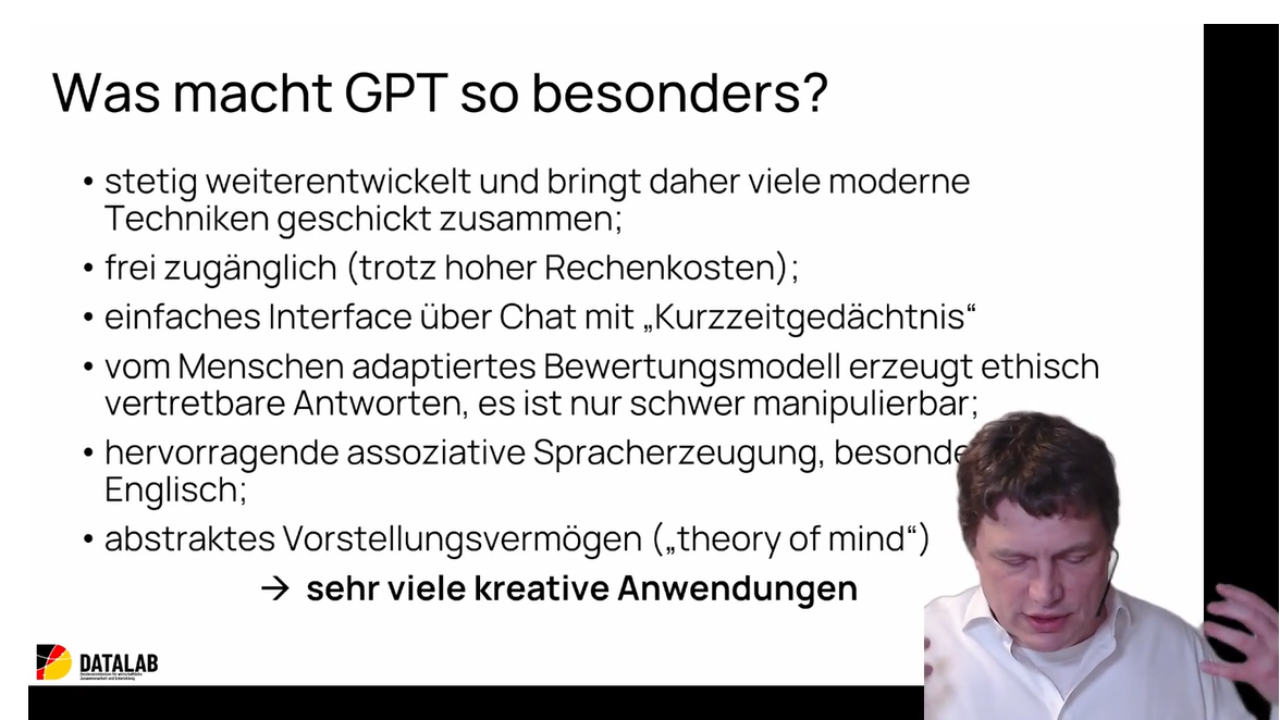
While neural networks are suitable for image generation, speech recognition uses so-called transformers that can translate one string into another. How do such language models like GPT work?
You are currently viewing a placeholder content from YouTube. To access the actual content, click the button below. Please note that doing so will share data with third-party providers.
More InformationPart 3:
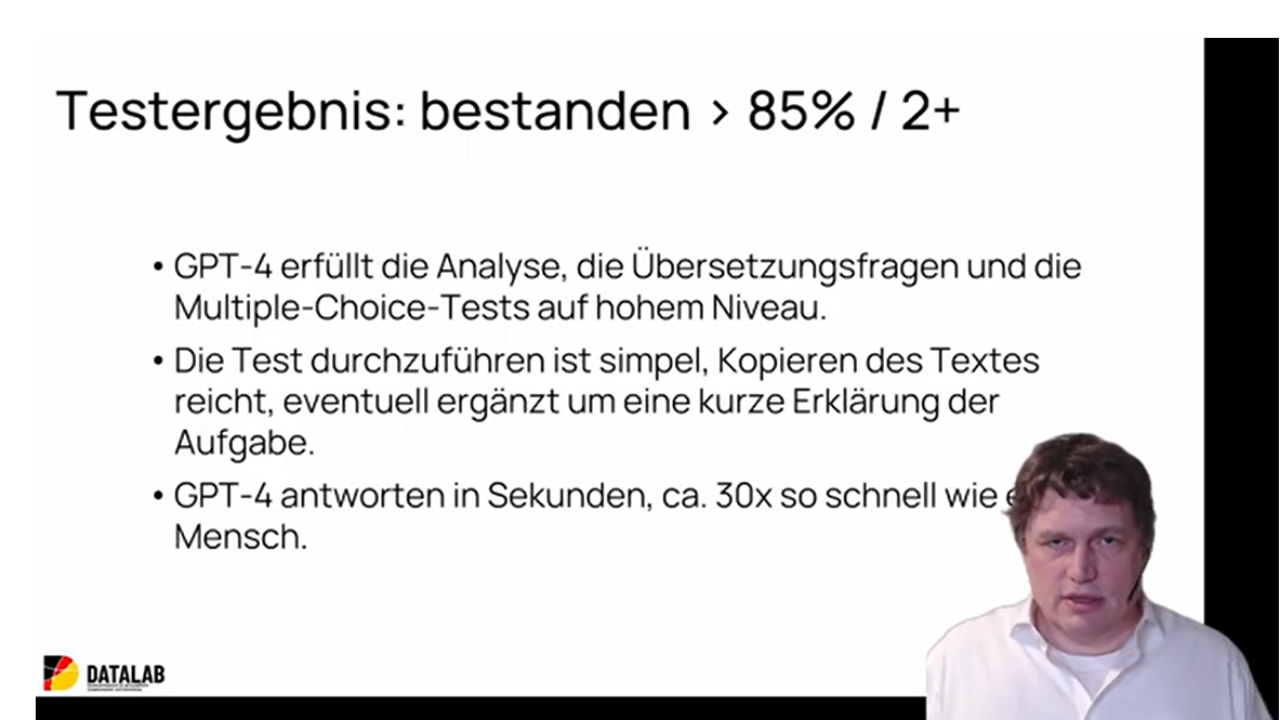
With its high level of expert knowledge, GPT-4 often performs above 85% of humans in tests and has developed an understanding of human emotions in addition to its mathematical understanding. How does this “next level AI” work?
You are currently viewing a placeholder content from YouTube. To access the actual content, click the button below. Please note that doing so will share data with third-party providers.
More InformationPart 4:
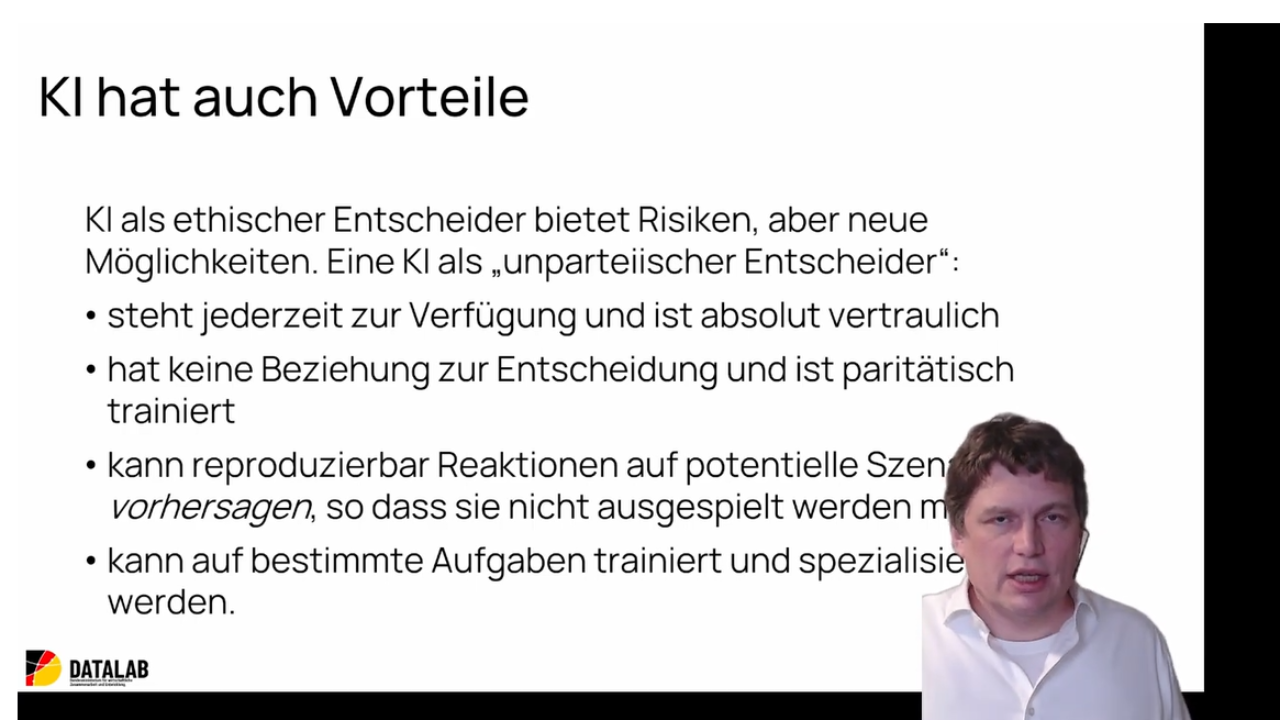
How can we exploit the opportunities of AI and limit the risks?
You are currently viewing a placeholder content from YouTube. To access the actual content, click the button below. Please note that doing so will share data with third-party providers.
More InformationPart 5:
The rapid development of AI faces the risk of loss of control. This raises the question of the state’s regulatory responsibilities. What might constructive regulation look like?
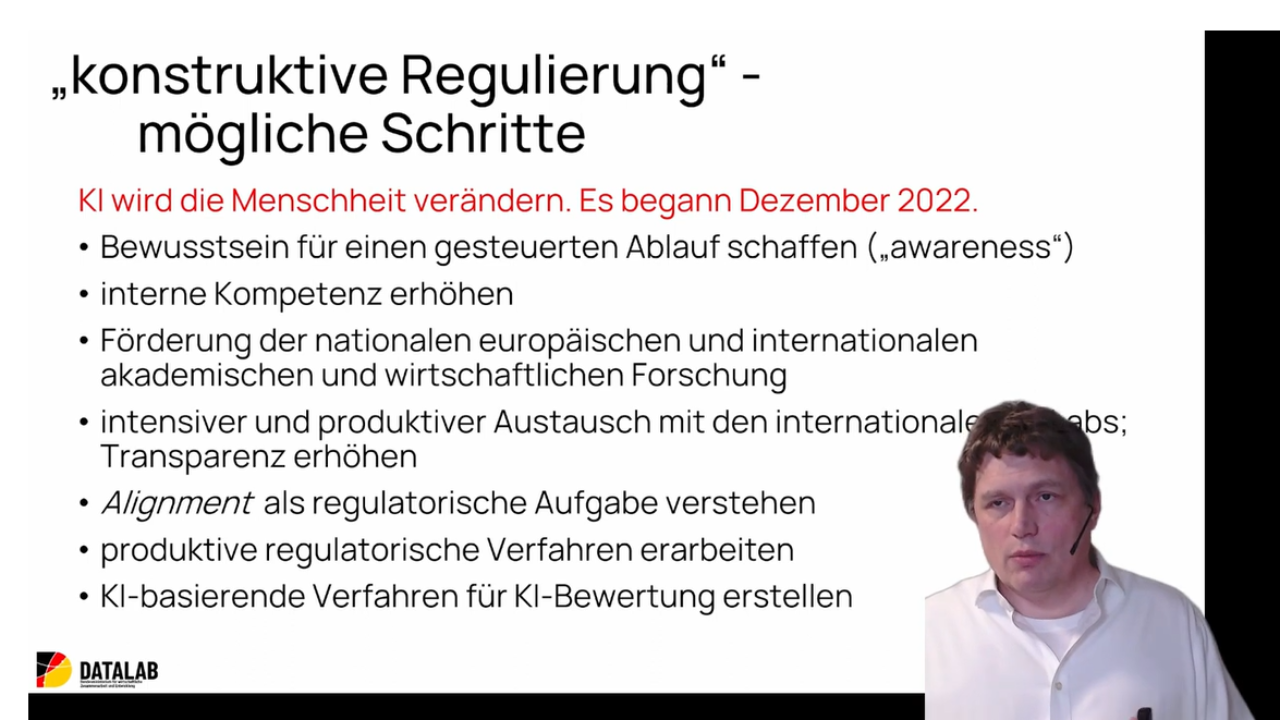
You are currently viewing a placeholder content from YouTube. To access the actual content, click the button below. Please note that doing so will share data with third-party providers.
More Information