Invisible Work Online: Study Reveals Blind Spots in the Digital Supply Chain

Designing logos, labeling data, repairing software. Cloud workers in the Global South keep digital business models running. A study now sheds light on why their work has hardly been considered part of supply chains until now.
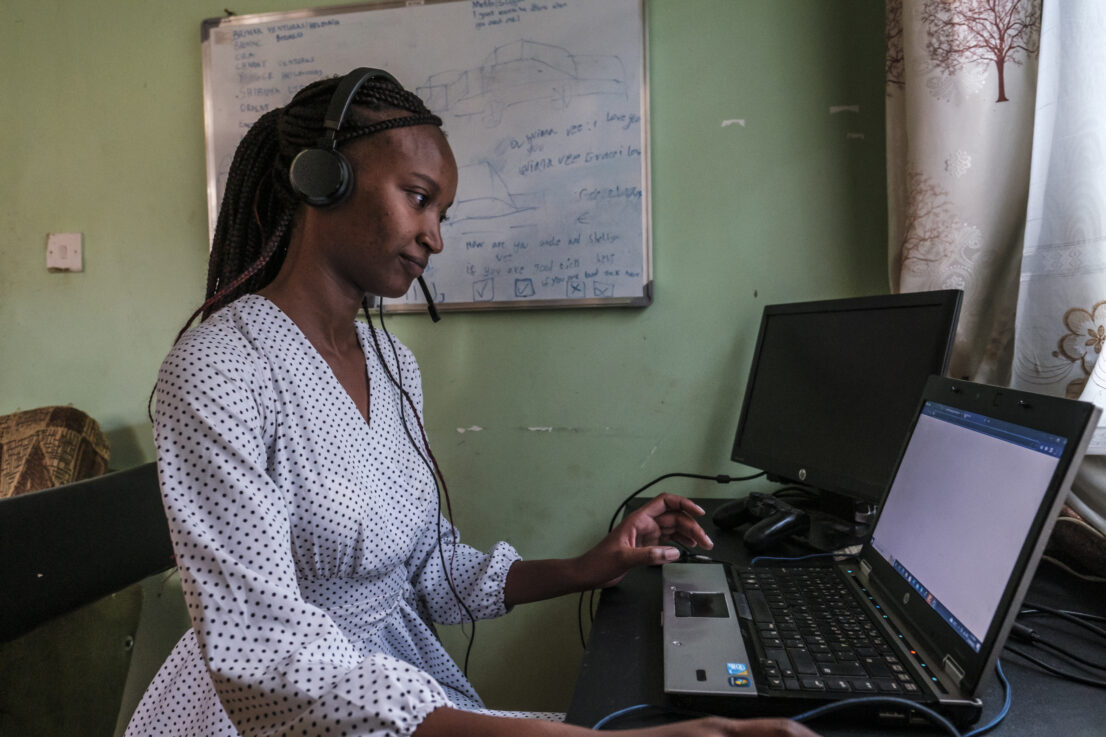
When Sara* logs in for work in Dhaka, her German clients are still asleep. By the time they start their day, Sara has already designed logos, prepared data, and resolved software issues. There is almost never any direct contact. “I rarely know who I am really working for,” she says. “You only see a username. Yet I support products worldwide.” Sara is one of many cloudworkers globally. They perform location-independent tasks that are mediated via platforms such as Fiverr or Upwork.
A new study by Dr. Fabian Braesemann (University of Oxford) and Moritz Marpe (TU Berlin), commissioned by the BMZ initiatives Global Solidarity and Gig Economy, sheds light on this global phenomenon. It shows how platforms connect German companies with remote workers in countries such as Bangladesh, Egypt, or Serbia. The study also examines the obligations that arise for companies under the German Supply Chain Due Diligence Act (Lieferkettensorgfaltspflichtengesetz, LkSG). Since 2023, this law has required companies to comply with human rights and environmental standards throughout their supply chains
Cloudwork as a blind spot in global supply chains
At present, German companies account for only a small share of global online demand. However, the market is growing rapidly: first, because firms are increasingly outsourcing tasks, and second, because artificial intelligence requires more data work such as labeling. The decisions made by German clients directly affect the lives of workers in the Global South. While some earn decent wages, many barely reach subsistence level. In addition, they face insecure income, long working hours, and a lack of social protection. “If a client doesn’t pay, there is no one you can turn to,” reports an Egyptian cloud worker.
Despite these challenges, cloud work receives little attention in German companies’ reporting. Text analyses show that digital remote work is rarely considered part of the supply chain. Moreover, on the relevant platforms, clients are difficult to identify, links and company names are often simply deleted.
Growing digital work, growing responsibility
Yet the study clearly demonstrates that cloud work can be integrated into existing due diligence systems—and that this is necessary. Greater transparency, clear rules for identifying clients, and fair wages would be key improvements. In addition, accessible grievance mechanisms are needed, independent of the platforms. Crucially, companies must assume responsibility: through reporting, fair-work initiatives, and risk analyses that also include cloud workers.
The message is clear: digital supply chains extend beyond factories and farms. Digital services are part of global production, and remote workers must therefore be protected as well. The first step is to make them visible. If policymakers, platforms, and companies act together, cloud work can evolve from shadow labor into an opportunity for many—without creating new risks for the most vulnerable.
*Name changed
For more information on cloudwork and trainings visit the following links:
- Fairwork: What is Cloudwork?
- Fairwork Cloudwork Ratings
- GIZ Online Freelancer Training Toolkit for Gig Workers
Authors:
- Dr. Fabian Braesemanm, Departmental Research Lecturer in AI & Work at the Oxford Internet Institute, University of Oxford
- Lukas Sonnenberg, Policy Advisor, GIZ